Ask most small business owners what their brand is and they will point to their logo. That is the first mistake. A logo is a symbol. A brand is everything customers think and feel when they encounter your business — before they call you, during the work, and long after the invoice is paid. The brands that stick are the ones that get four things right. Most small businesses miss at least two of them.
Element #1: Visual Identity That Is Actually Distinct
Distinct does not mean complex or expensive. It means your business looks recognizably different from competitors at a glance. The problem for most small businesses is that they choose colors, fonts, and design styles that look like every other business in their industry — navy blue and white for a law firm, green and brown for a landscaping company, red and yellow for a food business. The result is a visual identity that blends into the background instead of standing out from it.
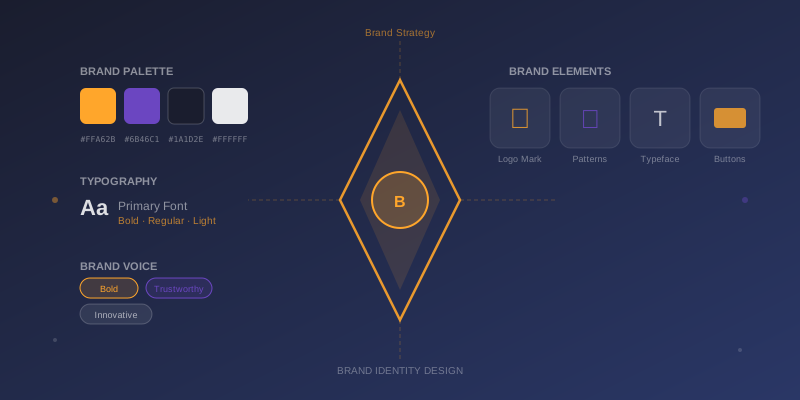
A strong visual identity has three things working together: a color palette of 2–3 colors used consistently across every touchpoint, a typography system (one heading font, one body font) applied the same way every time, and a logo that works in both color and black-and-white, at both small and large sizes. That is the entire system. The power is not in any single element — it is in the consistent application of all three across your website, social media, business cards, signage, and any other customer touchpoint.
The test: if you removed your business name from your marketing materials, could a customer who has seen your brand three times still identify it? If not, your visual identity is not doing its job.
Element #2: A Brand Voice That Sounds Like a Real Person
Brand voice is how your business communicates in writing — the words you choose, the tone you use, whether you are formal or conversational, technical or plain-language. Most small business websites and social media posts sound like they were written by a committee or a legal team: generic, cautious, and forgettable.
The businesses that build loyal followings are the ones that sound like someone you would actually want to work with. That means making a decision about your voice — are you the expert who explains complex things simply? The no-BS straight shooter who tells it like it is? The warm, community-focused neighbor who genuinely cares about local customers? There is no wrong answer, but there is a wrong non-answer: trying to appeal to everyone and sounding like no one.
Once you define your voice, apply it everywhere. Your email replies, your Instagram captions, your website About page, your invoice thank-you notes. Consistency builds the feeling of a real personality behind the business — and that is what customers trust and remember.
Element #3: A Clear Positioning (Who You Are For)
Positioning is the answer to: who specifically do you serve, and what specifically makes you different? Most small businesses try to answer "everyone" for the first question and "great service and quality" for the second — both of which are non-answers that destroy brand memorability.
Strong positioning is narrow. A web design company that serves "US small businesses" is less memorable than one that specializes in "restaurants and food businesses in New York." A plumber who does "all plumbing work" is less referable than one who is "the pipe relining specialist for older Brooklyn homes." Narrow positioning feels counterintuitive — it seems like you are excluding customers. In practice, it makes you the obvious choice for the customers you do want, and it makes you far more referable because people know exactly when to recommend you.
Your positioning should be visible on your homepage above the fold, in your GBP description, and in how you introduce your business in person. If you cannot say in one sentence who you serve and what makes you different, that is the first brand problem to solve.
Element #4: Emotional Consistency Across Every Customer Touchpoint
The most underrated element of brand building for small businesses is consistency — not visual consistency (though that matters too), but emotional consistency. This means the feeling a customer gets when they visit your website, when they call to ask a question, when they receive their first invoice, and when they leave a review should all be variations of the same feeling.
If your website looks polished and premium but your phone manner is rushed and informal, that inconsistency creates doubt. If your Instagram feels warm and personal but your emails are cold and transactional, customers feel like they are dealing with two different businesses. Each gap between the brand you project and the experience you deliver erodes trust.
Audit every customer touchpoint: website, phone calls, emails, social media, invoices, follow-ups. Ask: does this feel like the same brand? Where there is a gap, close it. This is the work that separates businesses customers merely use from businesses they recommend.
If you want help developing a brand identity that is visually distinct, strategically positioned, and built to attract the right customers, schedule a free brand consultation with BizmaTech.
Frequently Asked Questions
What makes a brand memorable?
A memorable brand has four elements working together: a distinct visual identity, a consistent brand voice, a clear positioning (who you serve and why you're different), and emotional consistency across every customer touchpoint. Most forgettable brands are missing at least two of these.
How much does branding cost for a small business?
A professional brand identity package for a small business typically ranges from $2,000 to $15,000 — covering logo, color palette, typography, brand guidelines, and collateral. Strategic positioning and brand voice development require professional guidance to execute correctly.
What is the difference between a logo and a brand?
A logo is one visual element of a brand. A brand is the entire perception people have of your business — visual identity, communication style, values, customer experience, and reputation. Many small businesses invest in a logo but never develop the full brand, which is why they stay forgettable.
How long does it take to build brand recognition?
Studies show customers need 5–7 consistent impressions before remembering a brand. For a local business, consistent branding across website, social media, signage, and customer interactions builds recognizable local presence within 6–12 months of consistent application.
Do small businesses really need professional branding?
Yes, if they want to compete on something other than price. Professional branding lets a small business command premium pricing, attract better clients, and build word-of-mouth reputation faster. Businesses with weak branding compete on price by default because they haven't given customers any other reason to choose them.